Diegetic World 0e
This is a playful thought experiment. It’s about drawing together and synthesising elements of two games from different schools of game design.
Maybe we get something playable out of it. Maybe it’s a pseudo-lyric-shitpost game about my RPG preferences. Let’s find out together.
Backgrounds, a playbook
Pasion de las Pasiones by Brandon Leon Gambetta is a PbtA game which removes character Stat (or Attribute) dice roll modifiers from the Playbooks and Moves, asking us instead to “roll with the questions”: gaining a +1 modifier to the standard 2d6 PbtA dice roll for each question you can answer affirmatively about your character’s standing in the established fiction. Each character sheet has a question unique to that character, and each Move has its own small set of true/false questions.
In the Mark of the Odd / Oddlike games written by Chris McDowall, the skill checks and proficiencies of more traditional dungeon-dragon design have been removed, and the classic D&D 6 Attributes with their d20 roll modifiers have been compressed into three Attributes (STR, DEX, CHA in Electric Bastionland) which double-up as your target number for d20 roll-under Saves.
Such elegant compression of rules demands that the game's Referee use their best judgement on when to call for Save rolls, to adjudicate who is most at risk, and what the consequences of a pass or fail Save could be based on what has already been established by player action and GM prep or description within the diegetic game world. In Chris McDowall's Bastionland games his guidance for the referee on adjudicating Saves is called the "Action Procedure".
Motivated variously by Snow’s post about branches of TRPG hobby as genre (is my post Rap-Metal? Are we doing Bring tha Noize?), Aaron King’s Home Game Quickstart, Show me your Moves series and Make Moves Jam, Yochai Gal’s writing in Cairn (which, to me, is clearly drawing on past PbtA experience), and hearing Max Lander’s recent call for finding commonality and overlap between different schools of RPG design instead of drawing rigid lines on RTFM pod...
...I want to see what happens if these games have a few too many then kiss.

Examples
Extract from Mythic Bastionland (my favourite of McDowall's games):
Past action taken by the players supersedes content generated by prompts or rules. Their deeds are reality.
ACTION PROCEDURE:
- Intent: What are you trying to do?
- Leverage: What makes it possible?
- Cost: Would it use a resource, cause Virtue Loss, or have a side-effect?
- Risk: What's at risk? No risk, no roll.
- Impact: Show the consequences, honour the established risk, and move forward.
If you're reading this blog you probably don't need me to explain it further. There's plenty of resources out there if you need more.
From Pasion de las Pasiones Basic Moves sheet:
When you express your love passionately, roll with the questions
- Are you dressed to impress?
- Do they believe that you are single?
On a hit, your target gives themself to you or reveals a secret they probably shouldn't. On a 10+, they also tell you whether they love you or not, and who else they love.
So if a character using the 'La Belleza' playbook is expressing their love passionately to another character, and it is established 'La Belleza' is dressed to impress and is the centre of attention (their playbook-specific question) but it is known they aren't single then they are getting a +2 to their 2d6 roll.
Just write the Move already.
(Okay, okay...) What follows is rules text. Where I use (brackets) I’m signalling commentary.
Take Action at Risk
When you are at risk and the outcome of your next action is in doubt, roll with the questions:
- Are you unharmed, unimpaired, aware of what you are threatened by, and thinking clearly? +1
- Is your Background and Experience (we’ll come to those in a minute) relevant to the situation? +1
- Are you equipped for the situation or threat? +1
- Have you established a clever or daring plan? +1
If your total is +4 (or greater) don’t roll; you avoid harm and/or achieve your intent as established in the fiction.
On a 10+ pick two:
- you achieve your intent.
- you avoid harm or an established consequence.
- you protect others from harm.
...and describe what your character does in this moment.
On a 7-9 pick one from the 10+ list above, and the GM chooses one from the list below:
- Threaten the players with a new problem.
- Escalate an established problem.
- Deliver on a threatened consequence and/or inflict harm as established.
- Increase the resource cost of the player's success.
...and describe together what happens in this moment.
On a 6 or less:
The GM determines what happens next.
The threat comes to pass; you and/or your allies are harmed as established, and events slip from your control. All bets are off.
You could die in this place.
Inspired by and derived from Pasion de las Pasiones & the writing of Brandon Leon-Gambetta.
Inspired by and derived from Into the Odd, Electric Bastionland, Mythic Bastionland & the writing of Chris McDowall.
So what the heck is this? What's missing?
At first I thought this was almost half a game? If you're willing to play a game where your character is a few notes on an index card; recording diegetic information like your character's background/history and experiences gained through play, what objects you might be carrying, and whatever harms or conditions might befall you as you play, then this Move could get you a long way toward a playable FKR-ish game.
But that's not much of an achievement, is it?
As Personable writes, cobbling together a resolution mechanic and calling it a game is the easy part. As Sam Sorensen previously described with In Praise of Legwork - the legwork is the game, the fiction is the game, the diegetic world is the game. When we create or run a "rules light" game for our friends the resolution mechanic is some circles and the legwork is the rest of the fucking owl.
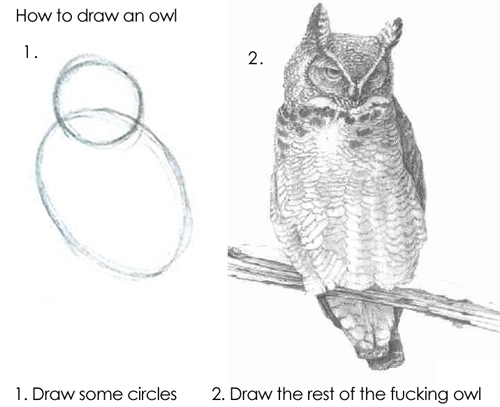
So... If I (or you) were to write a page or two of rules text around the Move and put in the legwork of adding in many many pages of modular backgrounds and diegetic world elements to fill out a book, if we provide maps and context and then we might end up with an "Apollo 47 Core" game.
The kinda-wacky idea I am toying with is using something like the Move above as the resolution mechanic for a kind of play-by-post Cataphracts-ish Braunstein-inspired Live Text Roleplaying Game. The key difference would be that most risky actions taken by the players are performed by them personally, and so instead of a 2d6 battle roll with modifiers for troop conditions and terrain we're "rolling with the questions".
I'll come back to the Braunstein thing later. If I do the legwork first then I should gain greater clarity over the correct dice mechanic.
We're also missing out on the resolution for player vs player actions, which is a potential buzzkill within the PbtA tradition. The Move assumes collaboration between players so it would either need a rewrite or some additional guidance on how the defending player can contribute and collaborate with the Referee to determine what happens next. Perhaps the Referee could total up "the questions" for the players and the one with the lowest total modifier rolls the 2d6.
Further thoughts
Where it gets interesting, for me, is in considering how this Move might play at the table in comparison to an Oddlike Save roll.
The authority of the GM seems a little more distributed, the process of adjudicating the roll more exposed to the players, and the process more rules-formalised - and that likely comes at the cost of raw speed in play. At first, at least.
Where PbtA style rules writing is especially fun and cool, to me, is that a Basic Move is a rules procedure laid bare to the whole table. We all see and know that "hey when X trigger is true, we follow Y procedure", and in the case of the Move above (I hope) we're getting something like OSR player and GM advice combined and codified into a rule procedure.
The problem with a broad-brush, widely applicable PbtA Move like the above is we're losing the specificity in the trigger and the generative prompt and pick-list components which enable a well written Move to truly sing. Is the Move I've written too disruptive of the flow state of play at the table - compared to an Oddlike Save - to justify the loss of the generative qualities we're getting from a more speficic "When you express your love passionately..." type Move?
Further further thoughts
Is this effectively a partial remake of World of Dungeons or effectively the Defy Danger move from Dungeon World? Kinda, sorta, maybe.
World of Dungeons seems cool, seems elegant, seems tough for me to choose to run it over Cairn 2e these days... but perhaps we could strip the Attributes from John Harper's World of Dungeons and then plug in and tweak the wording of my Move to make something approaching a cromulent TRPG. If I was going to expand on the Move to make a more full game I'd probably take inspiration from Harper's work but really focus on providing backgrounds, rules for levels of harm and conditions a player might suffer from (e.g. "hurt" -> injured -> dead"), and other trackable and strictly diegetic elements.
Additional Notes
It should be said that Pasion de las Pasiones already includes a Move approaching a Save - "Act With Desperation":
When you act with desperation, tell the MC what situation you want to avoid, and roll with the questions
- Are you doing this for love?
- Are you doing this for vengeance?
On a 10+ you manage to hold it together. On a 7-9 the MC will give you a worse outcome or an ugly choice.
I love Leon-Gambetta's writing there. Terse, evocative of theme, and instructive for play.